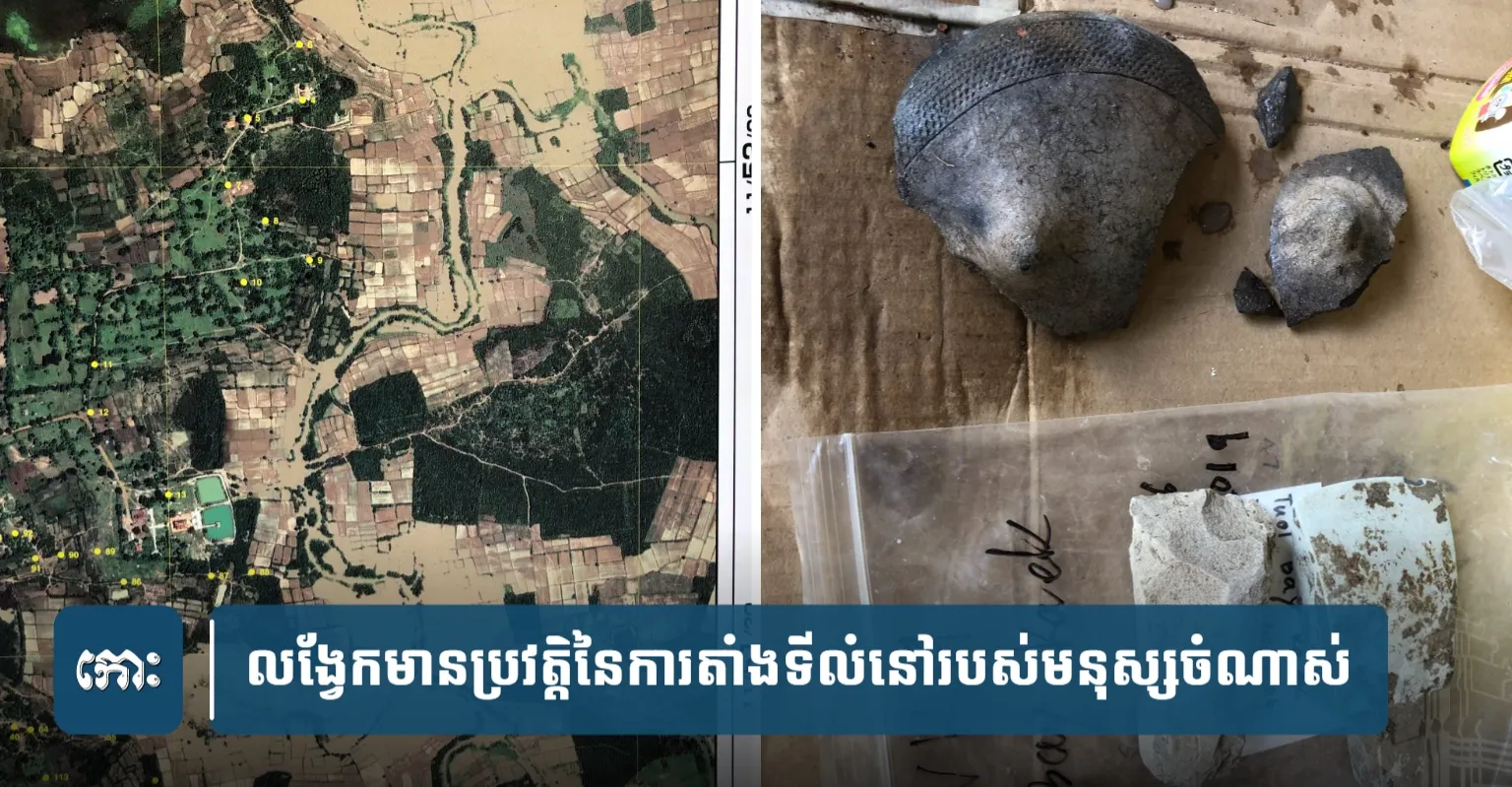
Evidence suggests people lived near Longvek over 2,000 years ago
Finds may show that Longvek’s human history began long before it became a capital.
Tuesday 3 November · 18:01 · 1 min read
In 30 seconds
- Archaeological research suggests the Longvek area may have been settled in prehistoric times. [1]
- Researchers point to decorated pottery fragments and stone tools found in the area. [1]
- Longvek’s citadel was built in the early 16th century, according to the Institute of Humanities and Social Sciences. [1]
What happened
Archaeological research suggests people may have lived in the Longvek area more than 2,000 years ago, before the historic city was built. The evidence cited includes decorated dark-grey pottery fragments and stone tools found there. Associate Professor Martin Polkinghorne’s research is cited in the report, which describes the site’s prehistoric settlement as a possibility rather than a confirmed conclusion.
Why it matters
The findings could add an earlier chapter to the history of human settlement around Longvek. The report does not say that researchers have confirmed the exact age or size of any settlement.
Background
The Institute of Humanities and Social Sciences says Longvek’s citadel was built in the early 16th century under King Chan Reachea, also known as King Ang Chan I. It later became an important Khmer capital in the post-Angkor period.
Key terms
- Prehistoric
- The period before written historical records were kept.
- Archaeological evidence
- Objects and traces from the past studied to understand how people lived.
- Citadel
- A fortified place built for defence and protection.
Sources (1)
[1] Kohsantepheap Daily លង្វែក ទំនងជាមនុស្សតាំងទីលំនៅតាំងពីបុរេប្រវត្តិសាស្ត្រ 3 Nov Read originalWas this explainer clear?
AI can make mistakes. Error reports go straight to our editors.